
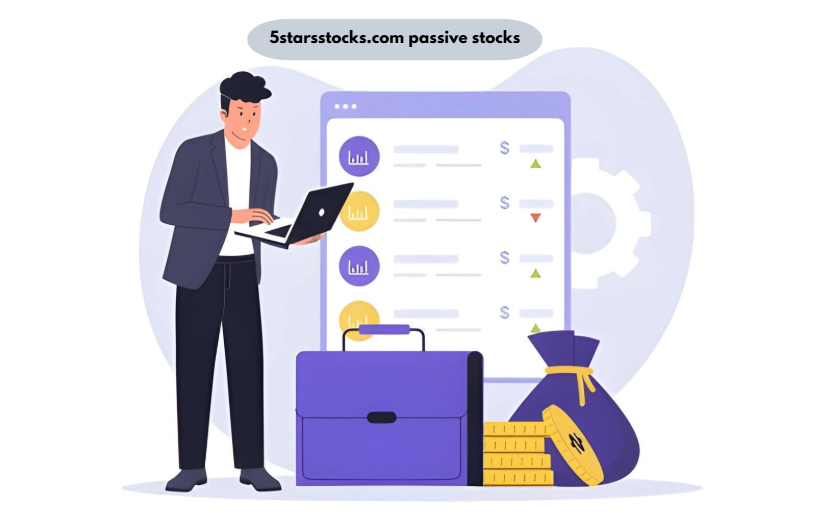
Passive stocks are shares in established, often dividend-paying companies that investors hold for years with minimal buying and selling, relying on steady compounding rather than active trading to build wealth. The appeal of 5starsstocks.com passive stocks comes down to one thing: they let ordinary people build real wealth without staring at a screen every day.
I started paying attention to this style of investing back in 2022, right after watching my own trading account get chewed up by fees and bad timing. What changed things for me was switching most of my holdings into boring, reliable companies and just leaving them alone in a Fidelity account. The aim is that it sounds almost too easy.
What does it mean to invest passively in stocks?
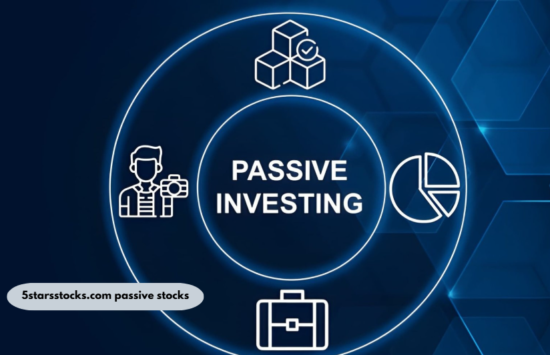
Investing passively means buying quality companies or funds and holding them long term instead of trying to time the market or chase short-term price swings.
It’s less about predicting what happens next week and more about picking businesses that will still be profitable a decade from now. You’re betting on steady growth, not lucky guesses. Because passive investing skips constant trading, you also avoid the short-term capital gains taxes and transaction costs that quietly drain active portfolios.
How much money do you need to start a passive stock portfolio?
You can realistically start a passive stock portfolio with as little as $50 to $100 thanks to fractional shares offered by most modern brokerages.
Back when I first got serious about this in 2023, platforms like Robinhood and Charles Schwab had already normalized fractional investing, so you no longer needed $500 just to own one share of a company like Costco or Johnson & Johnson. What actually matters more than your starting amount is consistency. A recent Bankrate survey found that investors who contributed small amounts regularly outperformed those who waited to save up a “big enough” lump sum, simply because time in the market did the heavy lifting.
How Does 5starsstocks.com Help You Pick Passive Stocks?

5starsstocks.com passive stocks are curated using a rating approach that filters companies by financial stability, consistent earnings history, and dividend reliability, giving investors a shortlist instead of forcing them to research hundreds of tickers alone.
What I appreciate about this kind of resource is that it does the tedious screening work that most beginners either skip or do poorly. When you’re trying to build a low-maintenance portfolio, the last thing you want is to spend twenty hours a week digging through balance sheets.
What criteria does 5starsstocks.com use to rate passive stocks?
5starsstocks .com generally evaluates companies based on earnings consistency, debt levels, dividend history, and overall sector stability.
These are the same fundamentals that seasoned analysts have relied on for decades, just packaged in a way that’s easier for everyday investors to digest. A company that has raised its dividend for fifteen straight years, for example, tells you something meaningful about how it handles recessions and rate hikes.
Is 5starsstocks.com free to use?
Yes, the core stock screening tools and educational content on 5starsstocks.com are free to use without a paywall, though users should always verify current access details directly on the platform.
I’d recommend treating any free investment research tool the way you’d treat a free financial podcast. It’s a great starting point for ideas, but you still want to verify the numbers yourself before putting real money behind a pick.
5starsstocks.com passive stocks vs Value Stocks: What’s the Real Difference?
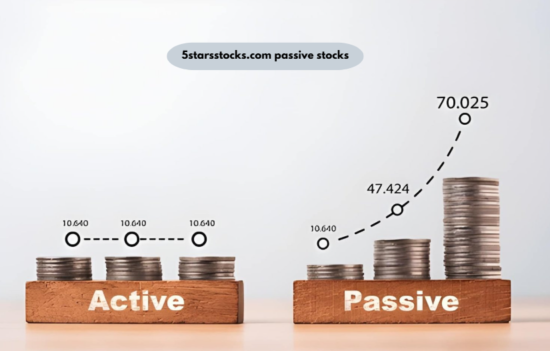
Passive stocks are chosen for long-term holding regardless of style, while value stocks are specifically companies trading below what their fundamentals suggest they’re worth, and 5starsstocks.com value stocks often overlap with passive picks because undervalued companies tend to be steadier long-term holds.
Are value stocks the same as passive stocks?
No, value stocks and passive stocks aren’t identical, though they frequently describe the same companies in practice.
A value stock is defined by its price relative to earnings or book value. A passive stock is defined by how you treat it in your portfolio, meaning you hold it and largely leave it alone. A company can be a great value pick and still get bought and sold frequently by a trader, which would make it anything but passive for that particular investor.
Which is better for beginners, value stocks or passive stocks?
Passive stocks tend to suit beginners best since they don’t demand the constant research active stock-picking requires
Here’s a quick side-by-side to make the distinction clearer:
| Factor | Passive Stocks | Value Stocks |
| Primary goal | Long-term holding with minimal trading | Buying below intrinsic worth |
| Research needed | Lower, focused on stability | Higher, focused on valuation metrics |
| Best suited for | Beginners and hands-off investors | Investors comfortable with deeper analysis |
| Typical holding period | Years to decades | Months to years, until price corrects |
| Risk profile | Generally lower volatility | Can be higher if the “value” is a value trap |
How Do You Build a Low-Maintenance Portfolio for Long-Term Growth?

You build a low-maintenance portfolio by selecting a handful of financially stable companies or index funds, automating your contributions, and reviewing your holdings only a few times a year rather than daily.
I learned this lesson the hard way. I checked my portfolio several times a day in 2022, but it did nothing but make me anxious and tempt me to make poor choices. Once I set up automatic contributions through my brokerage and committed to reviewing things quarterly, my returns actually improved because I stopped interfering with my own strategy.
How often should you check a passive stock portfolio?
Checking your passive stock portfolio once every three months is usually enough to stay informed without overreacting to normal market noise.
Daily price movements are mostly irrelevant to a strategy built around holding for years. Constant checking tends to trigger emotional decisions, and those emotional decisions are exactly what erode long-term returns. Reddit communities like r/Bogleheads talk about this constantly, and their core advice hasn’t changed in years: set it, automate it, and step away from the app.
What percentage of a portfolio should be passive stocks?
Many financial planners recommend putting 60% to 80% of a long-term portfolio into passive holdings, leaving the rest for active or speculative bets if you want them. It’s not a hard rule, just a balance that tends to work well.
It gives you a stable foundation while still leaving room to experiment with a smaller portion of your money if you enjoy the process of picking individual opportunities.
Frequently Asked Questions About Passive Investing
Do passive stocks pay dividends regularly?
Many passive stocks do pay dividends, and reinvesting those dividends is actually one of the biggest drivers of long-term compounding.
Can you lose money with passive stocks?
Yeah, passive equities can lose value, especially when the entire market falls—no investing strategy is fully risk-free.
Do I need a financial advisor to invest passively?
No financial advisor needed to get started — most brokerages now come with educational tools and screening resources that make self-directed investing manageable.
Should I mix individual stocks picked from 5starsstocks.com with index funds?
A common approach is mixing individual picks from a screening resource like 5starsstocks.com stocks with broad index funds—you get targeted opportunities plus built-in diversification.
The Honest Bottom Line
Building wealth through 5starsstocks.com passive stocks isn’t glamorous, and it was never supposed to be. It’s about picking solid companies, automating your contributions, and resisting the urge to fiddle with things every time the market gets noisy. I’ve made plenty of mistakes chasing quick wins over the years, and every single time, the boring, patient approach ended up winning in the long run.
If you’re ready to actually put this into practice, open your brokerage app today, pick two or three financially stable companies you already believe in, and set up a recurring automatic buy this week. That one small step is how a genuinely low-maintenance portfolio actually gets built.




4 Comments on “5starsstocks.com Passive Stocks: Build a Low-Maintenance Portfolio for Long-Term Growth ”