

5starsstocks.com healthcare is a research section focused on tracking publicly traded healthcare companies, giving investors stock summaries, sector trends, and comparative data to help narrow down which companies deserve a closer look before making an investment decision.
Healthcare stocks are a maze—insurers, hospitals, biotech, device makers, and pharma all crammed under one “healthcare” label despite behaving nothing alike—so a tool like 5starsstocks.com healthcare, which groups companies by subsector, is genuinely useful, especially for beginners, since the real rookie mistake isn’t picking a bad stock but not understanding its sector dynamics, and you can avoid spending hours poring over 10-K filings to determine whether a company is even in a growth period by using this type of resource.
What does 5starsstocks.com cover for healthcare stocks?

5starsstocks.com healthcare covers stock overviews, sector categorization, and trend commentary across major healthcare sub-sectors.
You’ll typically find breakdowns by pharmaceuticals, biotech, health insurance, medical devices, and increasingly, cannabis-adjacent healthcare plays as that space matures. The goal seems to be giving readers a starting point rather than a final answer, which honestly is the right approach for any third-party research site. No single source should be your only input before you put real money on the line.
Is 5starsstocks.com free to use?
Yes, the healthcare content and stock summaries are accessible without a paywall.
That said, free research tools are a starting point, not a substitute for checking primary sources like SEC filings or your brokerage’s own research tab. I’d treat any third-party site, including this one, as a filter that helps you build a shortlist and then verify everything through your actual brokerage platform before you commit capital.
Top Healthcare Stocks to Watch in 2026

What are the best healthcare stocks right now?
There’s no single “best” healthcare stock, but large-cap diversified players and companies with strong pipeline visibility tend to attract the most investor attention in 2026.
There’s no single “best” healthcare pick—it depends on your time horizon. Diversified giants spanning insurance, pharma, and services tend to be steadier, since they’re not riding on one approval or ruling. Biotech and specialty pharma, on the other hand, swing more but can pay off big when a drug gets approved. This is exactly the kind of nuance a good 5starsstocks.com stocks breakdown should help you sort through instead of just handing you a generic list.
Which healthcare stocks pay dividends?
Established pharmaceutical companies and diversified health insurers are historically the most reliable dividend payers in the sector.
Younger biotech firms almost never pay dividends because they’re plowing every dollar into research and clinical trials. If dividend income matters to your strategy, you’re generally better off looking at companies that have been profitable and cash-flow positive for a decade or more, not the ones making headlines for a hot new drug candidate.
Are healthcare stocks a good investment in 2026?
Healthcare remains a defensive sector overall, but individual stock performance still depends heavily on regulatory outcomes, patent cliffs, and interest rate sensitivity.
People love calling healthcare “recession-proof,” and there’s some truth to that since people don’t stop needing medical care when the economy slows down. But that doesn’t mean every healthcare stock is safe. Patent expirations can gut a pharma company’s revenue overnight, and policy changes coming out of Washington can swing entire sub-sectors in either direction within a single news cycle.
Current Healthcare Market Trends Investors Should Know
Anyone using 5starsstocks.com healthcare tools right now will notice three dominant structural tailwinds running through the market:
- GLP-1 and Metabolic Breakthroughs: Weight-loss and metabolic health treatments continue to dramatically reshape pharmaceutical company valuations.
- AI-Assisted Diagnostics: Institutional capital is pouring rapidly into companies utilizing AI for faster drug discovery and diagnostic imaging tools.
- Demographic Shifting: An aging U.S. population keeps long-term demand for surgical medical devices and managed care structurally resilient.
What’s driving healthcare stock growth in 2026?
Weight-loss and metabolic drugs, AI-driven diagnostics, and an aging population are the three biggest structural tailwinds for healthcare stocks this year.
How does the cannabis sector fit into healthcare investing?
Cannabis-related healthcare stocks remain higher risk due to shifting federal and state regulations, but they’re increasingly tracked alongside traditional pharma names.
The 5starsstocks.com cannabis coverage reflects a broader shift where legal cannabis companies are starting to be evaluated more like specialty pharmaceutical firms, especially as more states expand medical programs. It’s still a volatile corner of the market, and federal rescheduling talk has moved stock prices on rumor alone more than once. If you’re going to dabble here, treat it like the speculative slice of your portfolio, not the core.
Key Healthcare Sub-Sectors Compared
| Stock Category | Growth Driver | Risk Level | Example Sub-Sector |
| Big Pharma | Patent pipelines, GLP-1 demand | Moderate | Metabolic and chronic disease drugs |
| Biotech | Clinical trial results | High | Gene therapy, rare disease treatments |
| Health Insurance | Aging population, policy stability | Low to Moderate | Medicare Advantage plans |
| Medical Devices | AI diagnostics, surgical tech | Moderate | Imaging and robotic surgery |
| Cannabis Healthcare | Regulatory shifts, state legalization | High | Medical cannabis products |
Healthcare Stock Risk Analysis
What are the biggest risks in healthcare stocks?
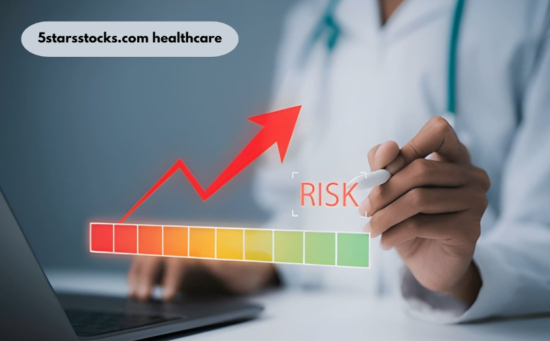
The biggest risks are regulatory changes, patent expirations, clinical trial failures, and reimbursement policy shifts from insurers or government programs.
A lot of newer investors assume healthcare risk looks like tech or energy risk, but it doesn’t—a single FDA decision can wipe out 30 percent of a biotech’s market cap in one trading session (and that happens multiple times a year, not as some rare exaggeration), while a surprise approval can just as fast double a stock’s price, making healthcare a sector where headline risk moves markets more violently than almost anywhere outside of crypto.
Unlike traditional tech or energy assets, healthcare market volatility is primarily driven by three unique factors:
- Binary Trial Outcomes: A single clinical trial phase can either double a biotech’s stock value or wipe out its capital overnight.
- Regulatory Stroke of a Pen: Changes to government reimbursement policies or Medicare Advantage updates heavily swing insurance margins.
- Patent Cliff Timelines: The exact day a blockbuster drug loses patent exclusivity opens the door to generic competition, impacting revenue cycles.
How do interest rates affect healthcare stocks?
Higher interest rates generally pressure growth-oriented biotech stocks more than stable, cash-generating pharma and insurance companies.
Biotech firms that aren’t profitable yet rely heavily on borrowing or raising capital to fund research, so when rates climb, their cost of capital climbs with them, which tends to compress valuations. Meanwhile, the big diversified healthcare names with strong free cash flow are far less sensitive to rate moves because they’re not dependent on external financing to keep operating.
How to Use 5starsstocks.com Stocks Tools Effectively
How do I research a stock on 5starsstocks .com?
Start with the sector overview, cross-reference the stock’s fundamentals, and then verify the data against a primary source like your brokerage or the company’s own investor relations page.
I’d treat any research platform, including 5starsstocks .com, as step one of a three-step process.
- Step one is narrowing your list using sector research.
- Step two is checking real financial statements.
- Step three is deciding how that stock fits your actual risk tolerance and time horizon, not just whether it sounds promising in an article.
Can beginners use 5starsstocks.com for stock picks?
Yes, but beginners should treat any single research source as a starting point for further due diligence, not a final buy signal.
Frequently Asked Questions
Does 5starsstocks.com healthcare cover small-cap biotech stocks?
Yes, sector breakdowns typically include smaller emerging biotech names alongside established large-cap players.
Is it riskier to invest in healthcare stocks than the average of the S&P 500?
It depends on the sub-sector, since diversified pharma and insurance names tend to be less volatile, while biotech and cannabis healthcare names carry noticeably higher risk.
Should I diversify across multiple healthcare sub-sectors?
Most financial advisors would say yes, since spreading exposure across pharma, insurance, devices, and biotech reduces the impact of any single regulatory shock.
Can policy changes in Washington affect my healthcare stock holdings overnight?
Absolutely, and this is one of the most underappreciated risks in the entire sector.
Final Thoughts
Healthcare investing rewards patience and punishes assumptions. The sector has real structural tailwinds right now, an aging population, breakthrough drug categories, and AI-powered diagnostics, but it also has landmines that can blindside you if you’re only looking at price charts. Using a resource like 5starsstocks.com healthcare to organize your research is a smart first move, but it works best as one input among several, not your only one.
If you’re serious about building a position in this space, take the shortlist you get from any research site, pull up the actual 10-K or 10-Q filings for your top three picks, and spend twenty minutes checking their debt levels and cash runway before you decide anything. That one habit will save you more money than any stock tip ever will.




One comment on “5starsstocks.com Healthcare Guide: Top Healthcare Stocks, Market Trends & Risk Analysis ”